1 min. read
What’s the Best Material for an Inground Swimming Pool? Tips and Expert Advice
Choosing the most suitable material is one of the most important decisions when getting your inground pool. It affects everything — how long does building the pool take, at what cost, its appearance as well as its lifespan.
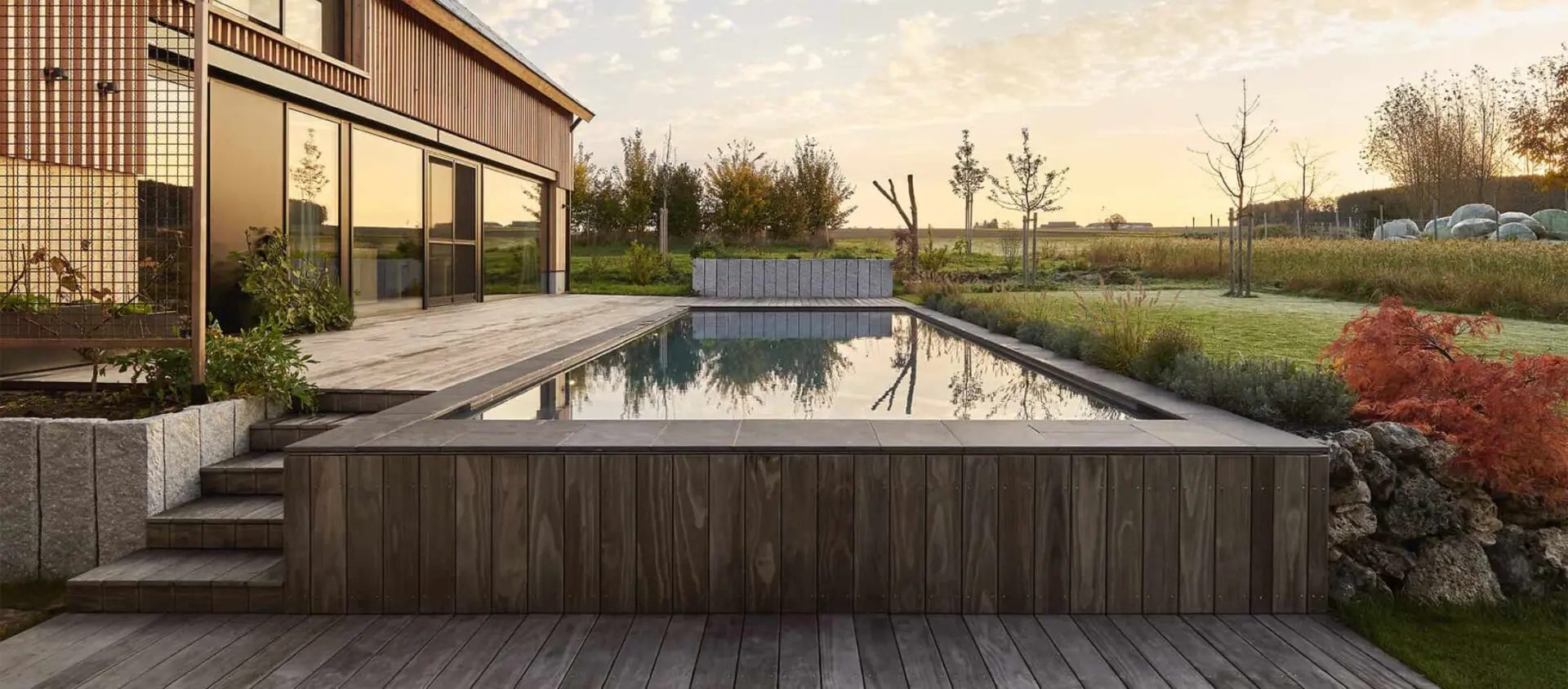
Usually, swimming pools are made of these materials:
- Concrete
- Plastic
- Laminate (fibreglass or composite)
- Ceramic
- Stainless steel
When selecting a material for your inground swimming pool, it's crucial to understand the advantages and disadvantages of each option
Concrete Pool
When building a concrete pool, the building company starts with digging an excavation in your garden and then pours concrete in to create a strong base plate. Once the base plate solidifies, the concrete walls of the inground pool are formed using a so-called ‘lost formwork’ or scarfing technique. At this stage, pipe holes for the water filtration system must be already taken into account.
As the next step, concrete needs to be levelled. Only then can workers move on to installing:
- Ceramic tiles
- Glass mosaic
- Pool liner
Have professionals build your concrete pool. By hiring experts, you can be sure (to some extent) that the pool won’t drain on its own. For instance, due to a leaking foil or as a result of poor waterproofing under the cladding.
A great benefit of a concrete swimming pool is its shape. You can get a 100% bespoke pool as concrete can be molded into any shape. Sounds good? Get your creative juices flowing.
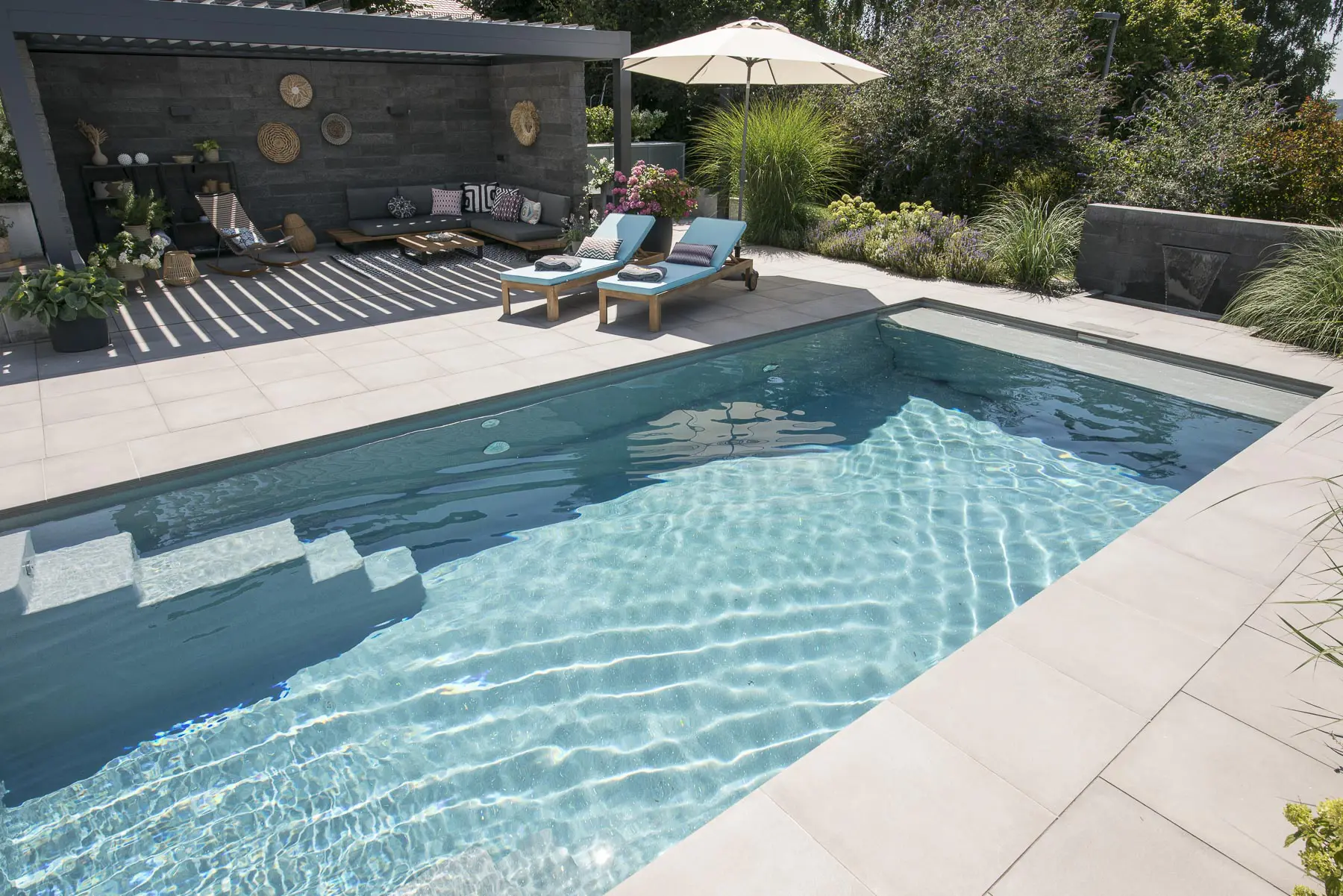
Interested in an unusual pool? Get a concrete pool in any shape.
That said, be prepared to wait for your new concrete swimming pool. Digging, pouring concrete, waiting for it to solidify, tile lining… isn’t done in a week. All building work takes time, often a lot more than initially expected.
Building a concrete pool for the garden can take weeks or even months. Your garden might end up looking like a dug-up battlefield during the entire summer.
The surface of a concrete pool is another problematic aspect. Both tiles and mosaics have seams of porous filler, in which algae and bacteria are likely to settle — making the pool more high-maintenance. Keeping the seams clean requires more pool chemicals and manual scrubbing with a brush from time to time.
If you have a pool liner in your concrete pool, be careful as it’s prone to damage.
A scratch or hole is not just an aesthetic flaw; it can cause leaking,
Pros of a concrete pool:
- Any shape
- Design
Cons of a concrete pool:
- Demanding construction requirements
- Higher price
- High-maintenance (cleaning of tiles and mosaics)
- Limited lifespan of pool liner
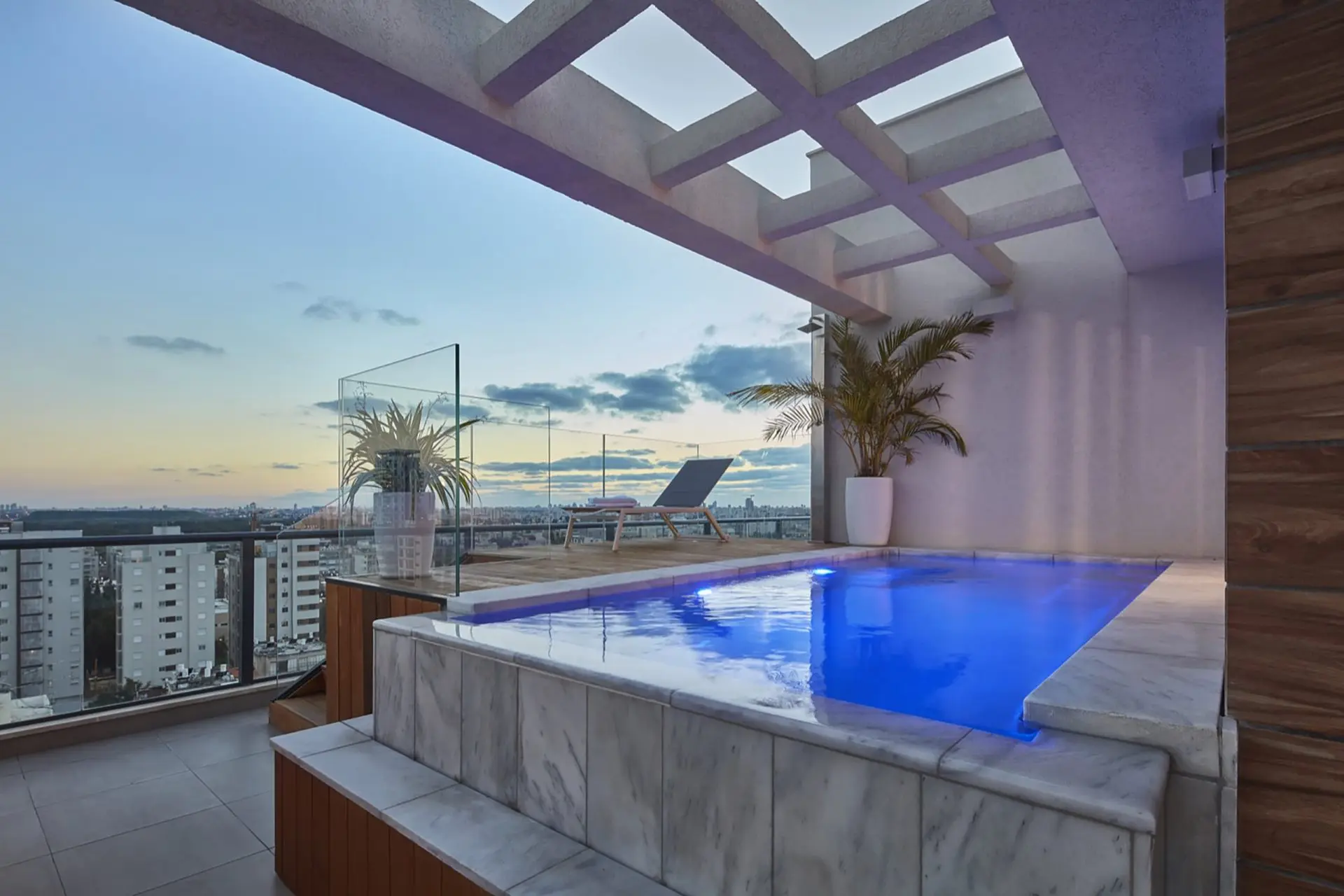
Plastic Pool
Plastic pools are made of welded polypropylene plates, usually 0.5-0.8 cm thick and reinforced on the outside with ribbing. The thicker the boards, the higher the quality of the pool. Search for 1 cm thick plates as thickness of 0.5 cm is not considered high quality.
It takes multiple parts to assemble a plastic pool. The joints of a plastic pool are the weakest point — they might degrade and start leaking over time. Thinner plastics bear the risk of deforming when exposed to heat.
Construction of a plastic pool is similar to a concrete pool. The building company excavates, makes concrete base plates and walls — and puts a plastic tub inside.
Even a plastic pool can be bespoke. Choose the shape and size you like — you might be limited in colour though. Plastic pools usually come only in different shades of blue.
The price range of plastic pools is quite wide. Swimming pools made of thin plastic are relatively cheap. Thick plastic is of remarkably higher quality but also more expensive.
Pros of a plastic pool:
- Lower price
- Easy maintenance
- Any shape
Cons of a plastic pool:
- Short lifespan
- Cheap appearance
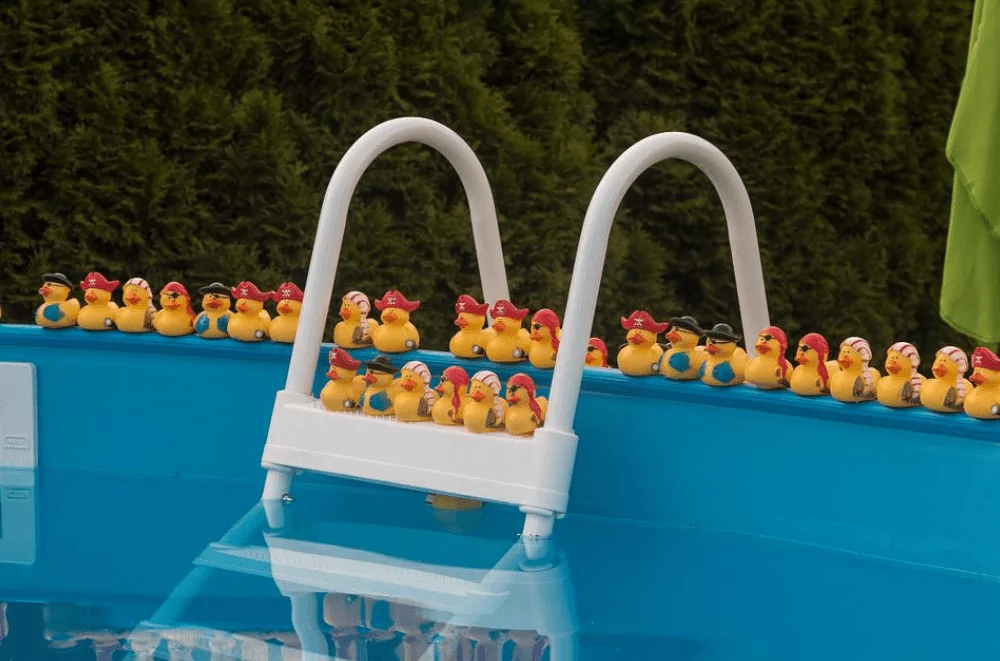
Both above-ground and inground pools can be made of plastic. The main benefit of cheap plastic pools is their low price.
Laminate or Fibreglass Pool
A laminate pool (or more precisely, a fibreglass pool) is made of a mixture of resin and fibreglass.
The term ‘composite pool’ is sometimes used as it refers to a mix of materials with different characteristics. Solid and flexible materials are used to make fibreglass pools.
Fibreglass pools are created by applying multiple material layers on a mould — a so-called ‘hoof’. All individual layers are painted, sprayed or otherwise placed on the mould from which the pool is peeled off after it solidifies.
You can choose only the shapes the manufacturer provides. A bespoke fibreglass pool would be extremely expensive. A high-quality mould costs several times more than the swimming pool itself. That said, a standard pool shape gets you a lower price.
The greatest enemy of a fibreglass pool is osmosis. If you take poor care of your swimming pool, small blisters may form on the lining — eventually, they might crack and cause leaks.
The main benefit of a fibreglass pool is its quick installation and affordable price.
Pros of a fibreglass pool:
- Easy maintenance
- Lower price
Cons of a fibreglass pool:
- Standard shapes only
- Shorter lifespan

A fibreglass pool is an excellent choice if you don't need a bespoke swimming pool.
Ceramic Pool
‘A ceramic swimming pool? Must be very fragile.’ You are not the first to ask this question.
Yet, the opposite is true. Ceramic pools are very durable as they are made of composite materials and consist of multiple layers.
Layer composition varies at different manufacturers. While you can purchase ceramic pools in supermarket chains, their material and processing method is often of average quality.
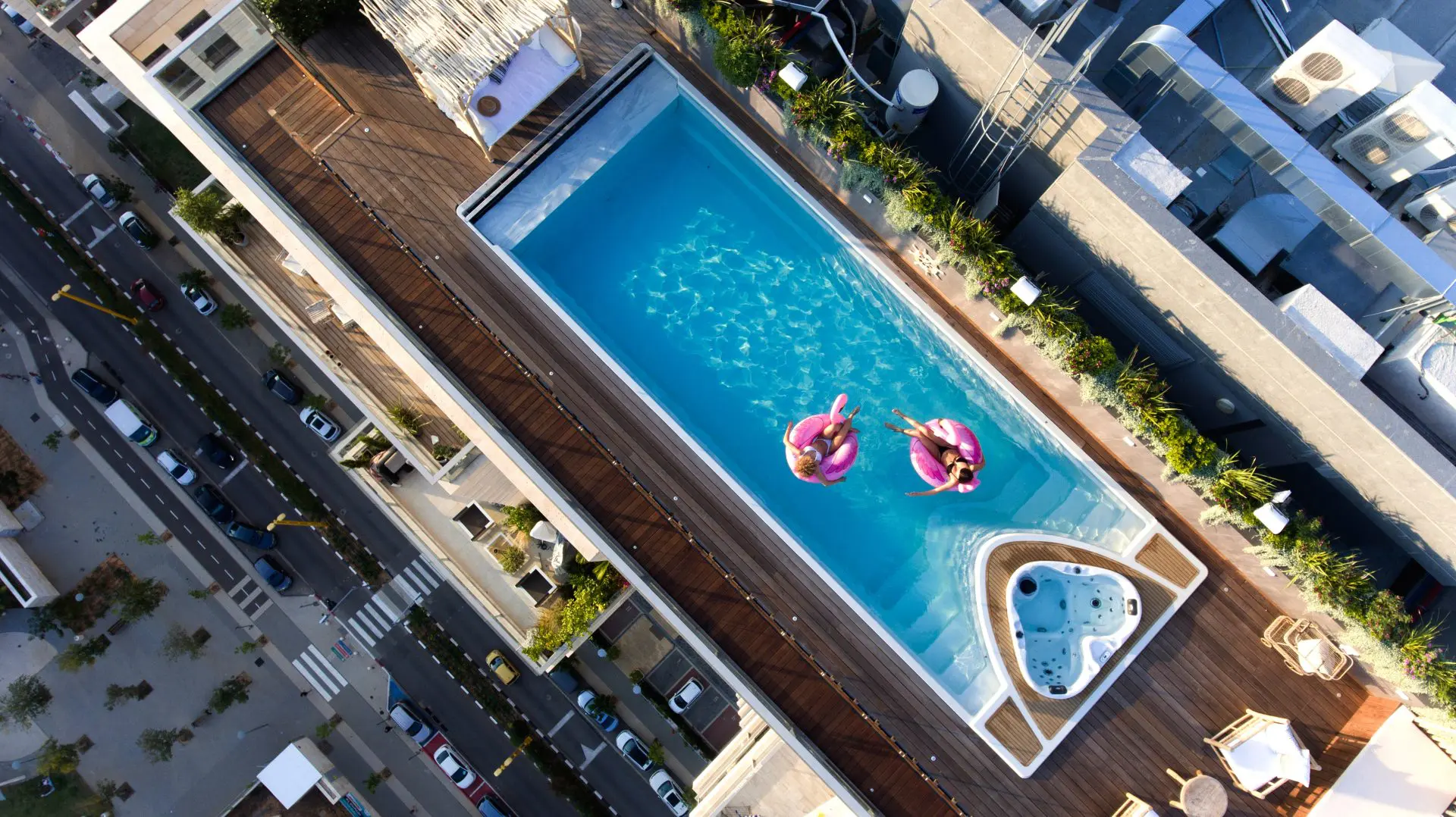
At Compass, we manufacture premium ceramic pools of the highest quality. The information below applies only to our own ceramic pools.
The pool core consists of a special ceramic layer. This ceramic core (a vinylester resin with ceramic microspheres) creates a layer resistant to both water and chemicals.
Our pools are reinforced with carbon mats — originally developed for the needs of NASA. The material is very strong and used in the aerospace industry or in production of premium bicycles.
Compass pools are robust but still quite light — and are very popular among building companies. A plastic tub tends to bend and deform during a plastic pool’s installation while ceramic pools are stable in shape and easy to handle.
A layer of polyester protects the ceramic layer and adds substance to the entire pool.
A special feature of Compass pools is their glittery surface which catches the eye at first sight. Water looks super sparkly and more inviting. Pool walls are smooth — microorganisms don’t settle in easily.
While the pool colour palette is often limited to shades of blue, Compass Pools offer many more colours. White, grey, the choice is yours.
A ceramic pool lasts for decades and still looks as new.
The fact is that premium ceramic pools require a higher investment compared to standard pool types. However, they offer a solution characterized by high durability, a long lifespan, easy maintenance, and a premium appearance. Therefore, the choice involves not only the initial cost but also the long-term value and comfort the pool provides.
TIP: Have a look at a step-by-step installation of a garden ceramic swimming pool.
Pros of a ceramic pool:
- Long lifespan
- Quick installation
- Easy maintenance
- Premium design
Cons of a ceramic pool:
- High price
- Only standard shapes
Stainless Steel Pool
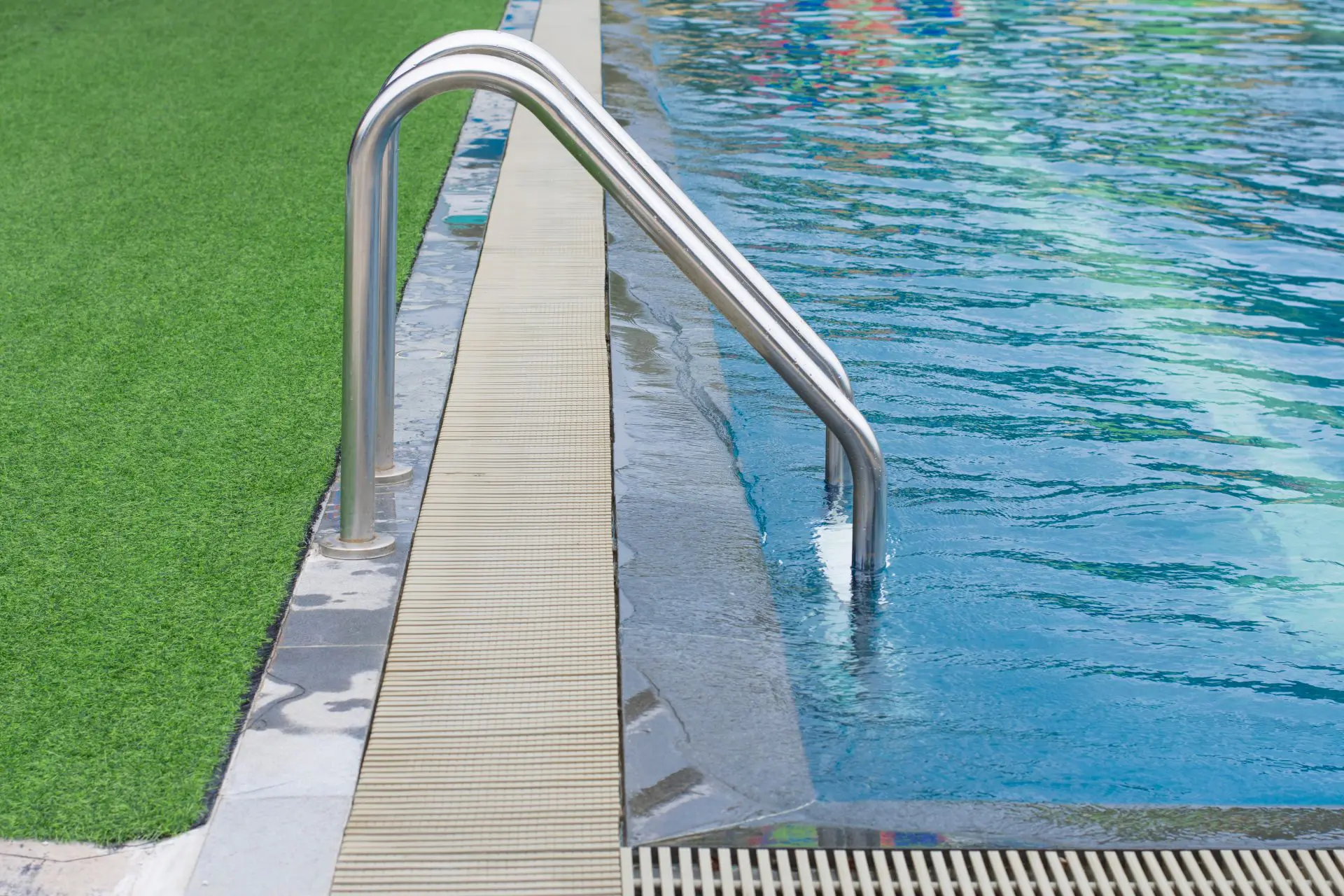
A stainless steel pool is made of stainless steel plates. When installing it, the building company makes an excavation, builds a concrete base plate and walls, and technicians then weld the individual steel plates to create the pool tub on-site. This allows you to get a pool in any shape.
Should you choose a standard shape, it usually arrives already welded.
Stainless steel is long lasting and it is at the top in pool options; the quality is high, and so is its cost as well. Its smooth surface is easy to maintain and doesn’t have many cons, except for the colour of stainless steel — some people find that grey colour gives them cold vibes.
Pros of a stainless steel pool:
- Long lifespan
- Easy maintenance
- Design
- Any shape
Cons of a stainless steel pool:
- High price
- Grey pool colour evokes a feeling of cold
Choose Your Pool in Person
We don’t recommend buying your swimming pool over the Internet. It’s a remarkable investment which stays in your garden for the rest of your life. Take your time and don’t be hasty.
Go and see the pool in person first. Touch the material. See the real colours. Closely observe the structure. Choose a pool you are happy with. It will make you happy for years to come.
Visiting a pool dealer is also important when getting a bespoke pool — you will be in touch with them during the whole process.
Search the map to find the closest dealer of Compass ceramic pools and schedule a visit