1 min. read
Is your pool skimmer clogged? How to clean it properly
If the water in the pool isn't circulating properly, debris is floating on the surface, and the filtration system isn't working as it should, the problem may be simpler than it seems. Very often, the culprit is a clogged skimmer—the component that collects floating debris before it sinks to the bottom or overloads the entire filtration system.
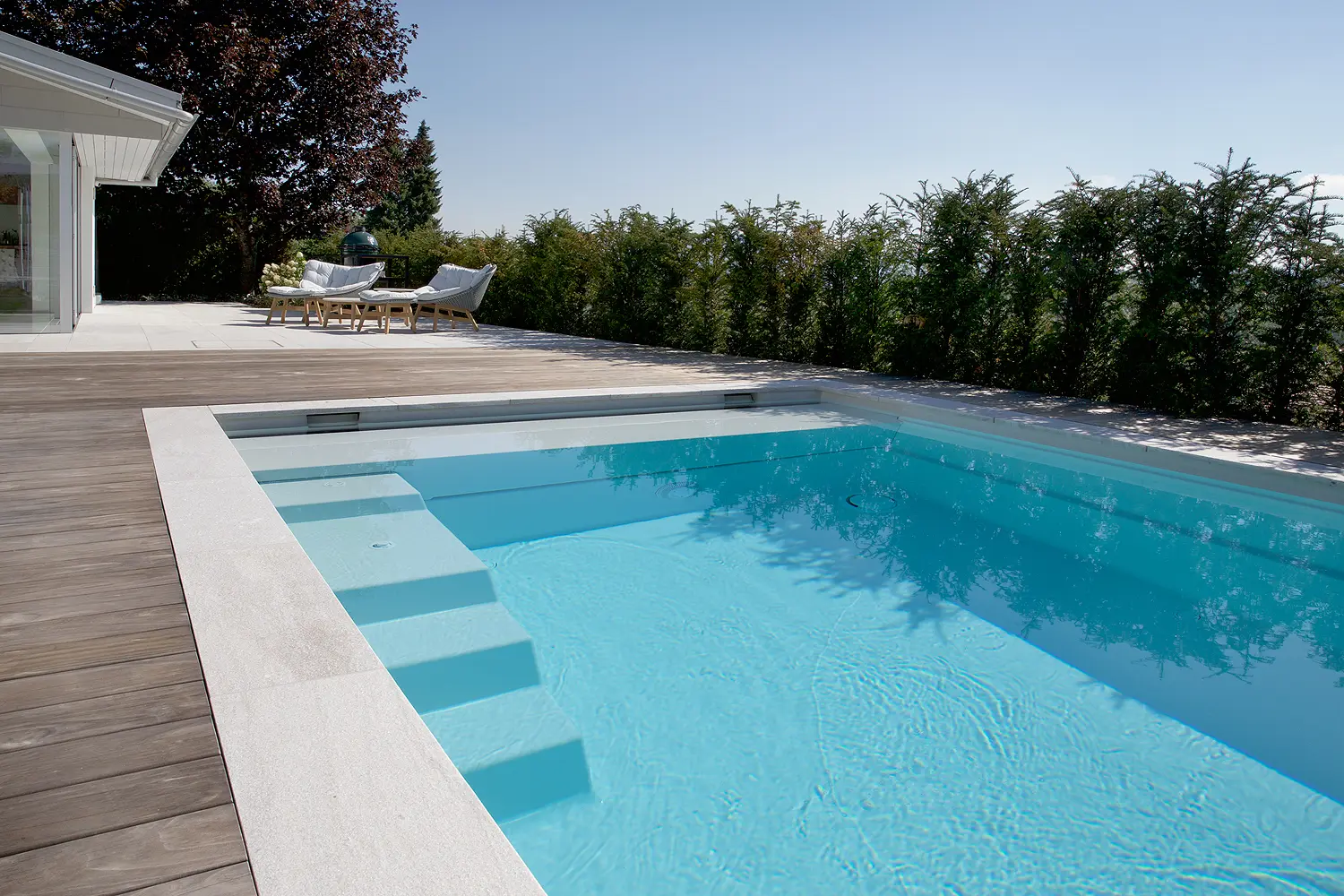
What does a pool skimmer do?
A pool skimmer is part of the circulation and filtration system. Its purpose is to capture debris from the water’s surface before it settles in the water, compromises water quality, or clogs other parts of the system.
Role in the pool filtration system
The skimmer draws water from the surface, collecting leaves, insects, pollen, hair, and other small debris along with it. This reduces the amount of organic material in the water and helps the filter work more efficiently.
Why proper function is important
If the skimmer is not working properly, the water surface remains dirty and debris gradually breaks down in the water. This can increase the need for disinfection, impair circulation, and contribute to cloudy water or algae growth.
Signs that your pool skimmer is clogged
A clogged pool skimmer usually manifests itself through changes in the water’s behavior rather than as a visible problem with the equipment. If you can recognize the early signs, you can take action before a minor issue turns into a more costly repair.
Low water flow
If the water flow at the skimmer is weak or irregular, something may be preventing it from drawing water smoothly. This is usually caused by a full basket, a buildup of grease, or a deeper blockage in the pipe.
Debris floating on the surface
If leaves, pollen, or small insects remain on the water’s surface even after the filter has been turned on, the skimmer is likely not functioning properly. This is often the first visible sign that the flow through the skimmer has decreased.
Unusual noises in the filtration system
Gurgling, fluctuations in suction, or unusual noises from the pump may indicate that the water flow is not steady. If the system does not receive a steady supply of water, the load on the equipment increases, and the problem may spread further down the circuit.
Common causes of skimmer clogs
A clogged skimmer isn’t just caused by storms or the fall season. It’s very often caused by a combination of everyday debris, cosmetic residue, and a neglected maintenance routine.

Leaves and organic debris
The most common causes of clogs are leaves, grass, insects, and small organic debris from around the pool. This material quickly accumulates in the basket and, under heavy load, restricts water flow.
Oils and residues from sunscreen products
It’s not just visible debris that settles on the water’s surface. Body oils, cosmetics, and sunscreen create a thin film that gets trapped in the skimmer and gradually reduces its effectiveness.
Plný alebo špinavý košík skimmera
Even a perfectly designed system loses efficiency when the basket is full. Emptying the basket regularly is one of the simplest steps you can take to protect both the pump and the filtration system.
How to Clean a Pool Skimmer Step by Step
How to clean a pool skimmer is a question most pool owners don’t ask themselves until the water starts acting up. In reality, it’s a simple process that you can handle without complicated tools if you proceed calmly and systematically. The basic recommended procedure is consistent across maintenance manuals and manufacturers.
Step 1: Turn off the pool pump
Always turn off the pump first to prevent debris from being sucked further into the system and to ensure safe handling. The CDC also recommends working with the system turned off when performing maintenance on the recirculation system.
Step 2: Remove the skimmer lid
After turning off the pump, carefully remove the skimmer cover. This will give you access to the basket, where most of the debris is usually collected.
Step 3: Empty and rinse the basket
Remove the basket, empty its contents, and rinse it thoroughly under running water. If there are grease deposits or a thin film inside, rinsing is just as important as emptying it.
Step 4: Check for hidden blockages
Look into the intake opening and check for any leaf buildup or other blockages further inside. If you suspect a clogged pipe, you can try flushing it with water, but if the problem is more serious, it’s best to call a service technician to avoid damaging the system’s hydraulics.
Step 5: Start the system and check the flow
Put the basket back in place, replace the cover, and turn the filter back on. Check to see if the water flow has improved, if the water level at the skimmer is stable, and if debris from the surface begins to naturally flow toward the intake again.

How often should you clean your pool skimmer?
Pool maintenance isn’t a one-time task, but a regular routine. How often you clean it depends on the season, the pool’s surroundings, the number of swimmers, and whether you use a pool cover.
Weekly Maintenance Recommendation
During normal operation, it is recommended to check and clean the skimmer basket at least once a week. If the pool is used frequently or is located near trees, more frequent checks may be necessary.
Seasonal variations
In the fall, the load tends to be heavier due to leaves and organic waste. In the summer, on the other hand, there is an increase in the amount of sunscreen, cosmetics, and small debris brought in by swimmers.
Tips for Preventing Skimmer Clogging
The best way to deal with a problem is to prevent it from arising in the first place. Prevention saves time, extends the life of the equipment, and helps keep the water consistently clean.
Use a pool cover
A cover helps prevent leaves, dust, and other debris from falling into the water. The CDC states that, in water facilities, covers help reduce environmental water pollution.
Clean the basket regularly
A quick check every few days is easier than dealing with a clogged filter. A regular routine maintains water flow and reduces the risk of debris reaching the pump.
Trim the trees and plants in the area
If there is a lot of vegetation around the pool, the amount of debris falling into it increases every day. Less debris from the surrounding area means less strain on the skimmer and the entire filtration system.
High-Level Skimmer vs. Standard Skimmer. Is there a difference?
With premium pools, it’s not just whether the skimmer works that matters, but also how it interacts with the water level, the pool’s aesthetics, and its hydraulics. Compass Pools integrates the High-Level Skimmer right from the manufacturing stage, combining design with practical operation.
What is a High Level Skimmer?
The High Level Skimmer is a solution that keeps the water level just below the edge of the pool. It creates an elegant look with the effect of an almost infinite water surface, without any visually distracting screws or flanges.
Benefits of the High Level Skimmer
A higher water level promotes effective debris collection from the surface while also creating a more luxurious look. Improved water circulation and a more attractive final design are among the added benefits of this solution across multiple pool models.
Common Mistakes When Cleaning a Pool Skimmer
Most problems with skimmers don’t arise because they’re difficult to clean. They arise because they’re cleaned too late, not thoroughly, or using the wrong method.
Forgetting to turn off the pump
Cleaning while the system is running is an unnecessary risk. It can make handling more difficult, push debris deeper into the circuit, and place an unnecessary strain on the equipment.
Failure to address deeper blockages
Emptying the basket isn’t always enough. If the clog remains further down the intake pipe, the problem will quickly return and filtration performance will remain poor.
Cleaning too infrequently
When you put off maintenance, a minor problem turns into a persistent flow issue. Neglecting routine maintenance reduces filtration efficiency and can also increase operating costs.
FAQ: Cleaning Your Pool Skimmer
How can I tell if my pool skimmer is clogged?
The most common signs are a weaker water flow, debris remaining on the surface, and sometimes unusual behavior or noise from the filter. If you notice these symptoms, check the filter basket first, and then the skimmer’s intake.
How often should I clean the skimmer basket?
In most home pools, at least once a week. More frequently if there is heavy use, after windy weather, or if the pool is near trees.
Can a clogged skimmer damage the pool system?
Yes, because reduced water flow increases the load on the pump and reduces the efficiency of both circulation and filtration. If left unaddressed for a long time, this problem can spread to other parts of the system.
What is the easiest way to clean a pool skimmer?
Turn off the pump, open the skimmer, remove the basket, empty it, rinse it, and check that there are no obstructions left in the intake opening. Then put everything back together and check that the water flow has been restored.