1 min. read
How to Choose an Inground Swimming Pool: Roofing/Cover, Cleaning and Water Heating [Part 3]
Choosing the most suitable material is one of the most important decisions when getting your inground pool. It affects everything — how long does building the pool take, at what cost, its appearance as well as its lifespan.

Before getting your first swimming pool, think about roofing, ways of cleaning and heating the water. Some of the smart technologies can be installed only into new pools, not later on.
If you missed the articles in which we discuss the first 5 key aspects to look for when choosing an inground pool, read part 1 and part 2 of our How to Choose an In-ground Swimming Pool Guide.
6. Pool Roofing/ Cover
With a pool roofing, you enjoy your swim even when the leaves fall. It also keeps a comfortable water temperature for longer.
Above-Ground Roofing
Above-ground roofing resembles a glass construction above the pool. Instead of glass, transparent polycarbonate is used as a filler.
This type of roofing usually slides on rails built into the terrace. Different heights of roofing are available. The lowest height only shields the water from fallen debris and prevents it from cooling off too quickly.
A higher pool roofing extends your swimming season. Swim from early spring to late autumn — the roofing provides wind protection and a higher than outside temperature.
The downside of the roofing is that it makes your pool visually less appealing and might obscure your view from the pool.
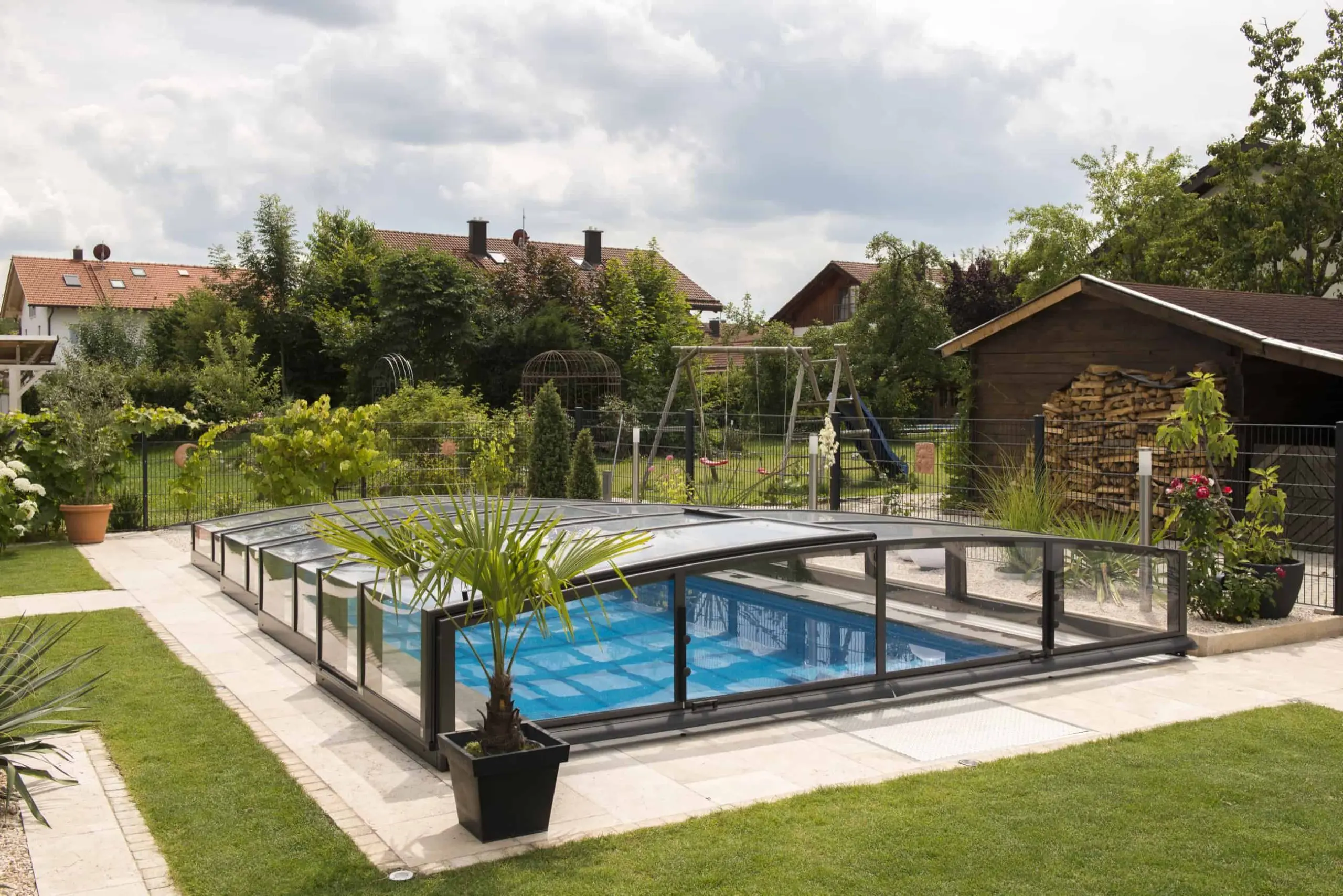
Compass ceramic swimming pool with above-ground sliding roofing.
Slatted Cover
You can also cover the pool with sleek but sturdy slats – Compass Rollo Cover. When swimming in the pool, the cover is out of sight.
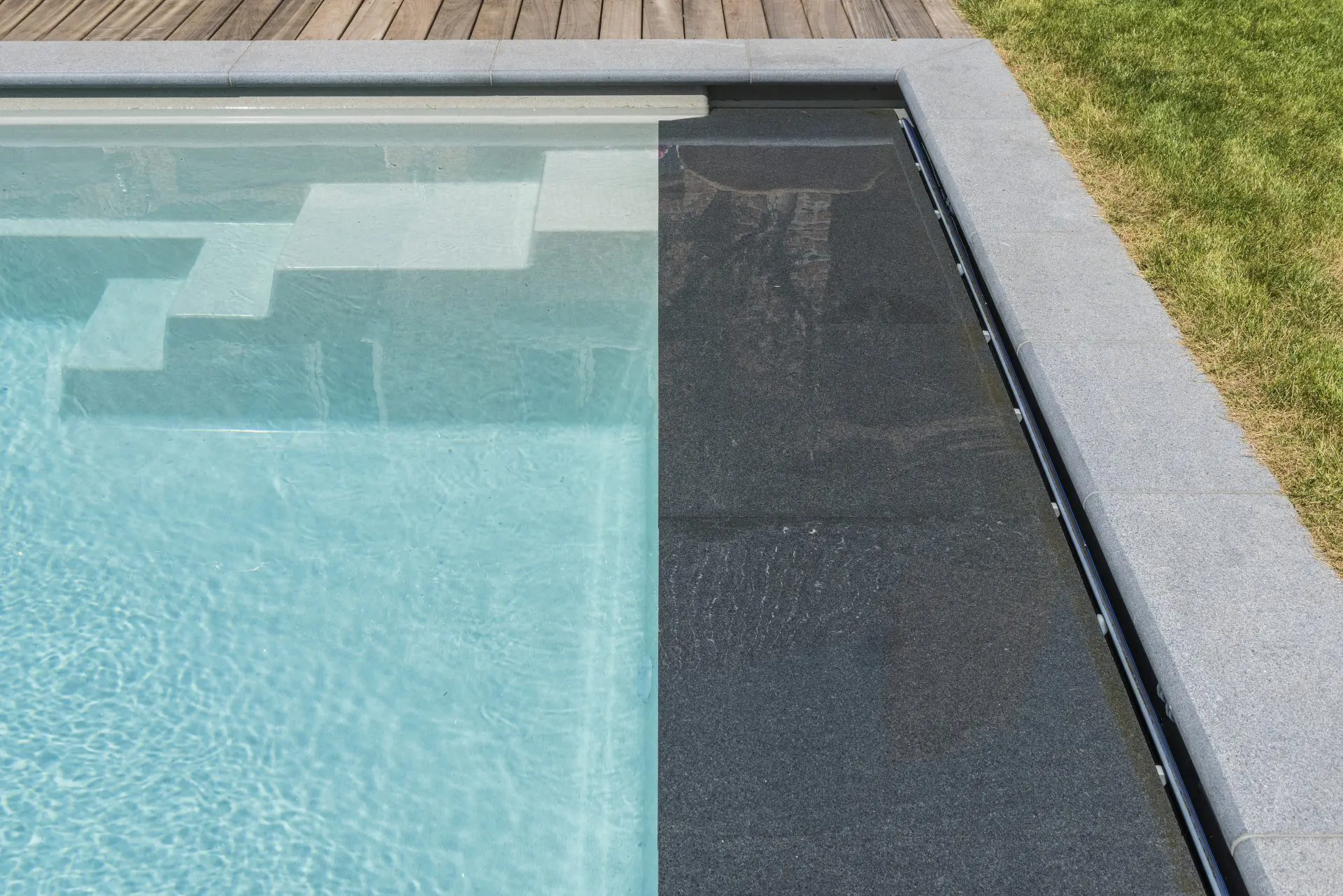
The slats are rolled into the built-in space behind the pool and remain completely hidden when using the pool.
Your pool is much safer with a Compass Rollo Cover as it prevents children or pets from accidentally falling into the water. The slats are so strong that they can even support an adult (they can carry up to 100 kg).
The Compass Rollo Cover with solar heating helps you heat up the pool water.
7. Cleaning
Consider in advance how to keep your pool clean — as some smart technologies can be installed only to new swimming pools, not later on.
All pools need to be cleaned both mechanically and chemically.
Mechanical Pool Cleaning
Sand filtration is a key part of mechanical cleaning as it draws water through a skimmer. Imagine the skimmer as an overflow hole in the sink, with water draining through when the basin is full.
In a swimming pool, the skimmer is found near the surface so that it is always mostly submerged. It drains water and debris floating on the surface. The sand filter catches debris and should be thoroughly rinsed once in a while (once every 3 to 4 weeks in the season).
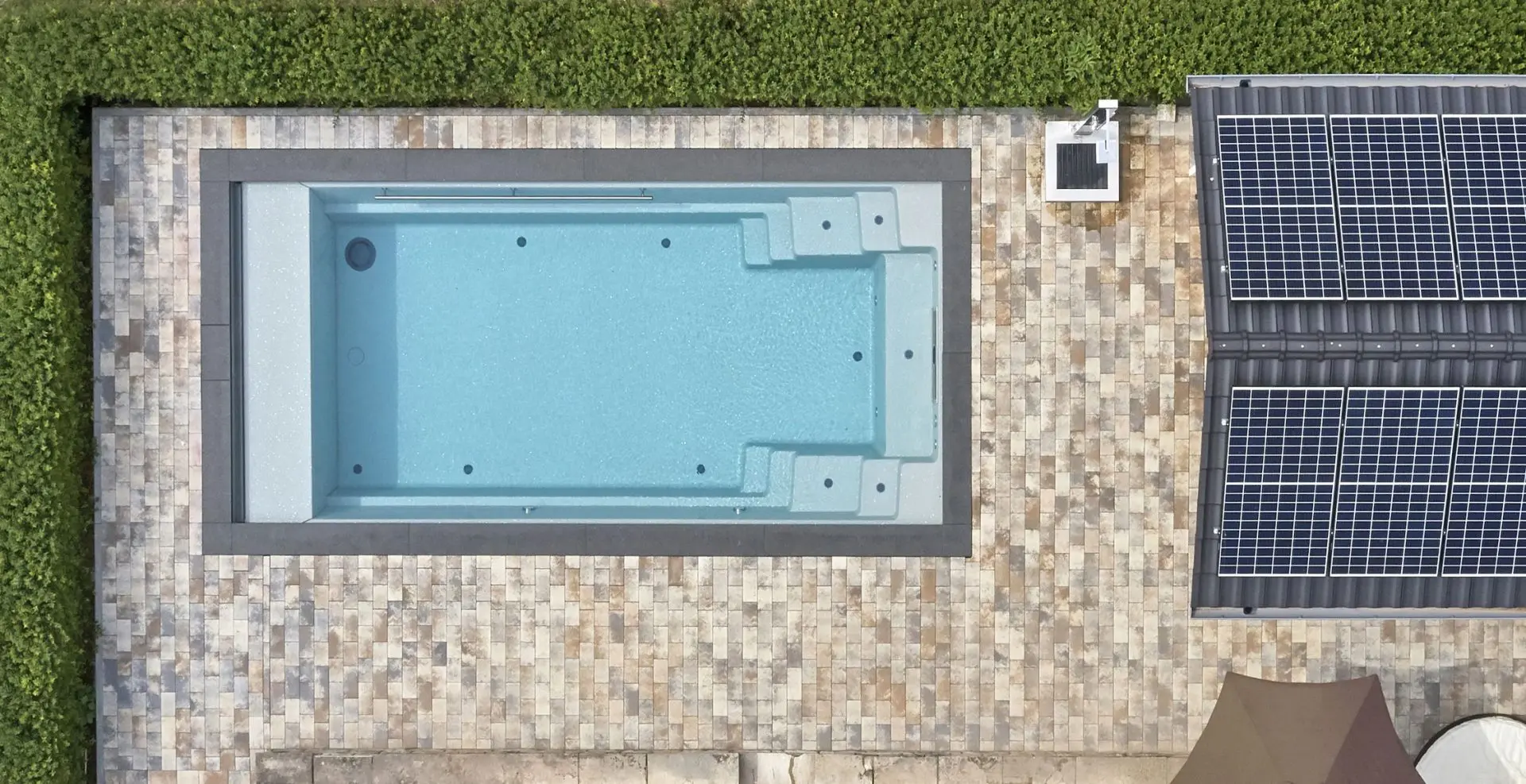
Debris also settles on the bottom of the pool. Different types of pool vacuum cleaners can be used to clean it:
- Automatic
- Semi-automatic
- Manual
Pool cleaning always requires some of your input. Even with an automatic vacuum cleaner, you have to lower the machine into the pool, then pull it out, dump all the debris, then put the cleaner away.
When you don’t want to spend your precious time on cleaning your pool, opt for a smart self-cleaning pool with VANTAGE® technology.
A swimming pool with VANTAGE® technology cleans itself, even with you swimming in it. Discreet nozzles are strategically placed into the pool and act as an underwater broom — they move the debris to the bottom drain, water gets filtered and circulates through the entire pool.
The VANTAGE® technology can be installed in newly-purchased pools only, not later on.
Chemical Cleaning
Let’s go back to how water works in the skimmer. It travels through pipes to an underground shaft (or a garden house) where it gets cleaned by a sand filter.
To keep water sanitary, you must check water pH value at least once a week (or more often in hot weather) and dose pool chemicals accordingly. You do this manually or by using automatic dispensers — they analyse the water, adjust the water pH and add the required amount of pool disinfection.
Also, consider the kind of pool chemicals you prefer — chlorine or salt. The latter method saves you a lot of work. You put the salt into the pool just at the beginning — unlike pool chemicals, you don’t have to refill it. A device called a salt chlorinator perpetually releases chlorine from salty water by electrolysis that disinfects the water.
Thanks to high-quality materials, ceramic Compass Pools are compatible with any disinfection method.
8. Water Heating
Children will likely enjoy the pool at any temperature. A lot of adults will not. If you want to enjoy swimming in cooler weather too, pool heating is a great solution. Using your pool will be more comfortable and you can use the pool for longer, from spring to autumn.
Pool water can be heated up by:
- Solar panels
- Electric instantaneous water heater
- Hot water heat exchanger connected to a domestic hot water (DHW) source
- Air-to-water heat pump
- Solar sail
Go through the available heating options for the pool with your pool dealer.
What’s Next?
Now you have a clear idea what to look for when choosing your dream swimming pool. You know all the options, their pros and cons. The next step is to get in touch with one of our authorised dealers.
We don’t recommend buying your swimming pool over the Internet. It’s a remarkable investment which stays in your garden for the rest of your life. Take your time and don’t be hasty.
Go and see the pool in person first. Touch the material. See the real colours. Closely observe the structure. Choose a pool you are happy with. It will make you happy for years to come.