1 min. read
How a pool cover helps maintain a stable water temperature
When it comes to pool covers and their impact on temperature, it’s not just about comfort. It’s also about efficiency—specifically, how to retain the heat that the water has already absorbed from the sun or a heating system. The greatest heat loss does not occur in the pool structure itself, but at the water’s surface. That is precisely why a pool cover is one of the simplest yet most effective solutions for maintaining a stable water temperature and minimizing unnecessary energy loss.

Why does the water temperature in the pool fluctuate?
If we want to talk about effective pool temperature control, we need to start with the basics. Pool water is constantly in contact with the surrounding environment. During the day, the sun heats it; at night, the air, wind, and open water surface cool it down. Without protection, the pool is exposed to constant heat exchange with its surroundings.
The result is simple: water heats up more slowly, cools down more quickly, and maintaining a stable temperature is both more difficult and more expensive.
Heat loss due to evaporation
The biggest source of heat loss is evaporation. When water evaporates from the surface, it doesn’t just disappear. It takes heat with it. That’s why an uncovered pool can lose energy much faster than most people realize.
Evaporation is the main reason why water cools down even when the outside temperature doesn’t drop dramatically. If the surface is exposed, heat escapes continuously.
The Effect of Air Temperature and Wind
Water temperature is affected not only by the air itself, but also by its movement. Wind accelerates the cooling of the water’s surface and promotes evaporation. Even a slightly windy day can cause the water temperature to drop significantly faster, especially if the pool is not covered.
The greater the difference between the water temperature and the ambient air temperature, the faster the pool loses heat.
Nighttime heat loss
At night, a pool loses two advantages at once. The sun no longer provides any additional heat, and at the same time, the water continues to cool down. Without a cover, a pool can lose a significant portion of the heat it has accumulated during the day in just one night.
That is precisely why the water is often noticeably colder in the morning, even though it felt just right the night before.
How a pool cover reduces heat loss
The main benefits of a pool cover are based on one simple principle: the cover separates the water surface from the surrounding environment. This significantly reduces heat loss and helps keep the water at a more stable temperature.
It’s not a complicated solution. Rather, it’s a logical step that helps preserve the energy the pool owner has already invested in.
Prevents evaporation
The most important function of a cover is to reduce evaporation. When the water surface is covered, the primary source of heat loss is significantly reduced. And this is precisely what has the greatest impact on water temperature stability.
A pool cover is not just an accessory. It is an active element that helps keep the heat where it belongs.
It keeps the water level steady
The cover also acts as a thermal barrier. It slows down the transfer of heat from the water to the cooler air and helps mitigate temperature fluctuations caused by the weather.
The higher the quality and the better the fit of the solution used, the more effectively it can protect the pool from unnecessary cooling.
Retains heat from sunlight
During the day, water naturally absorbs heat from the sun. However, without a cover, much of this energy is lost after sunset. A cover helps keep the heat accumulated during the day in the water longer.
In practice, this means that the pool doesn’t cool down as quickly and is ready for use sooner the next day, requiring less reheating.
How much heat can a pool cover save?
When it comes to retaining heat in a pool, there is no single universal figure. The result depends on the weather, wind, type of cover, frequency of use, and whether the pool is heated. However, one thing is almost always true: a covered pool retains its temperature significantly better than an uncovered one.
The difference isn’t just theoretical. It’s noticeable in everyday use.
Average temperature retention
Depending on the conditions, a cover can help keep the water a few degrees warmer. With high-quality solutions, this difference isn’t just theoretical—it actually enhances the swimming experience.
It is precisely this difference that often determines whether the water still feels pleasant or already feels cold.
Energy savings due to reduced heating requirements
When the pool doesn’t lose heat as quickly, the heating system doesn’t have to work as hard or as often. This leads to lower energy consumption and, in the long run, lower operating costs.
The cover thus not only provides greater comfort but also makes the entire pool more economical to operate.
A Real-World Comparison: Covered vs. Uncovered Pools
Let’s imagine two similar pools. Both are heated to a comfortable temperature during the day. One remains uncovered overnight, while the other is covered after use.
In the morning, an uncovered pool will require more energy to reach a comfortable temperature again. A covered pool retains more heat, reaches the ideal temperature faster, and is ready for use with less heat loss.
The difference is simple: one pool loses heat, while the other retains it.
Types of pool covers and their effect on temperature
Different types of pool covers offer different benefits. Some are designed primarily to retain heat, while others focus on comfort, safety, or ease of use. Therefore, the choice should not be based solely on price, but also on how the pool will be used and the desired outcome.
Solar canopies
Solar covers are ideal for situations where the owner wants to make the most of sunlight. They help reduce heat loss while also aiding in water heating on sunny days.
They are a practical solution, especially in environments where ease of operation and a good return on investment are important.
Automatic pool covers
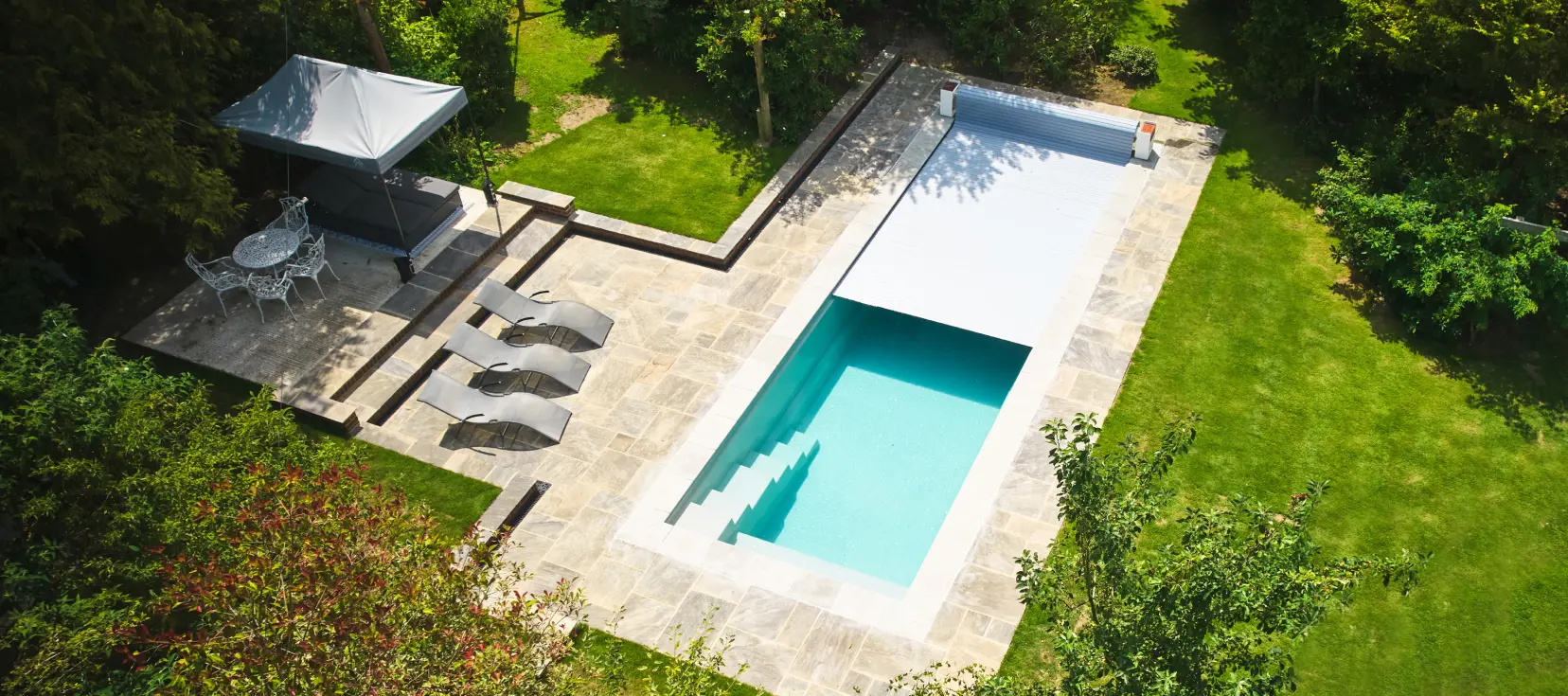
Automatic pool covers have one key advantage: they are used regularly. And it is precisely this regularity that determines whether the cover actually works. If the pool is easy and convenient to cover, the likelihood of daily use is significantly higher. That’s why automatic solutions make a lot of sense for premium pools. They combine thermal protection, ease of use, clean design, and enhanced safety.
Rigid safety covers
Rigid safety covers provide reliable protection and are ideal for applications where safety, protection against dirt, or winterization are priorities.
Their advantage lies in their durability and practicality in everyday use. On the other hand, however, they typically do not harness solar energy as efficiently as covers designed specifically to support water heating.
Other benefits of using a pool cover
A pool cover does more than just regulate the temperature. In a well-designed pool, it improves overall operation, reduces maintenance requirements, and makes the pool a more comfortable place for everyday use.
Lower water evaporation
Since the cover reduces evaporation, the pool loses less water. This means less topping up, lower water consumption, and more stable operation. It’s a detail that people often don’t realize until they no longer have to deal with it.
Lower chemical consumption
A covered pool is better protected from debris, dust, and outdoor elements. The water tends to be more stable, and the need for pool chemicals may decrease.
This means not only lower costs, but also easier maintenance and a more pleasant swimming experience.
Greater security
When the right solution is chosen, safety is another major benefit. This is especially important in households with children or pets.
A pool cover is therefore not just a matter of energy savings, but also of ensuring a more peaceful daily routine around the pool.
When is a pool cover most effective?
Overlapping doesn’t have the greatest effect just because it’s available. It works best when used at the right time and on a regular basis.
During the night
Nighttime is often the most critical period in terms of heat loss. Covering the pool at night is therefore one of the simplest and most effective ways to keep the water warmer until the next day.

On windy or cold days
When the weather is unstable, windy, or cooler, an uncovered pool loses heat more quickly. A pool cover helps limit this loss and protects the water from sudden cooling.
During the transitional periods in spring and fall
In the spring and fall, the right cover can determine how long the pool will actually be usable. The water will stay at a comfortable temperature longer, and the swimming season can be significantly extended.
The most common mistakes that reduce the effectiveness of pool covers
Even a high-quality product can yield poor results if used incorrectly. This is usually not a problem with the product itself, but rather a mismatch between expectations and actual use.
Irregular use
The cover only works when it is closed. If the pool is covered only occasionally, the results will be just as sporadic. Consistency is key to maintaining a stable temperature.
Incorrect selection of overlay type
Not every type of roofing meets the same need. In some cases, thermal insulation is the priority; in others, it is comfort, safety, or design. If the wrong type is chosen, the result may not meet expectations.
Poor fit or poor installation
If the cover doesn’t fit properly, heat will continue to escape between the water’s surface and the surrounding area. Every gap reduces efficiency. For a premium pool, therefore, it makes sense to choose a solution that is designed as a natural part of the whole, not as an afterthought.
FAQ: Pool Covers and Water Temperature
Will a pool cover really keep the water warm?
Yes. A cover helps keep the water warmer, primarily by significantly reducing evaporation and heat loss through the water’s surface.
How much heat does a pool lose overnight?
It depends on the weather, wind, ambient temperature, and whether the pool is covered. However, without a cover, heat loss at night can be significant.
What kind of cover is best for retaining heat?
It depends on the specific application. Solar covers work well with solar gain, while automatic covers combine comfort, regular use, and excellent thermal insulation.
Can a pool cover replace pool heating?
Not exactly. However, it can significantly reduce the need for heating and help keep the water comfortably warm much more efficiently.